

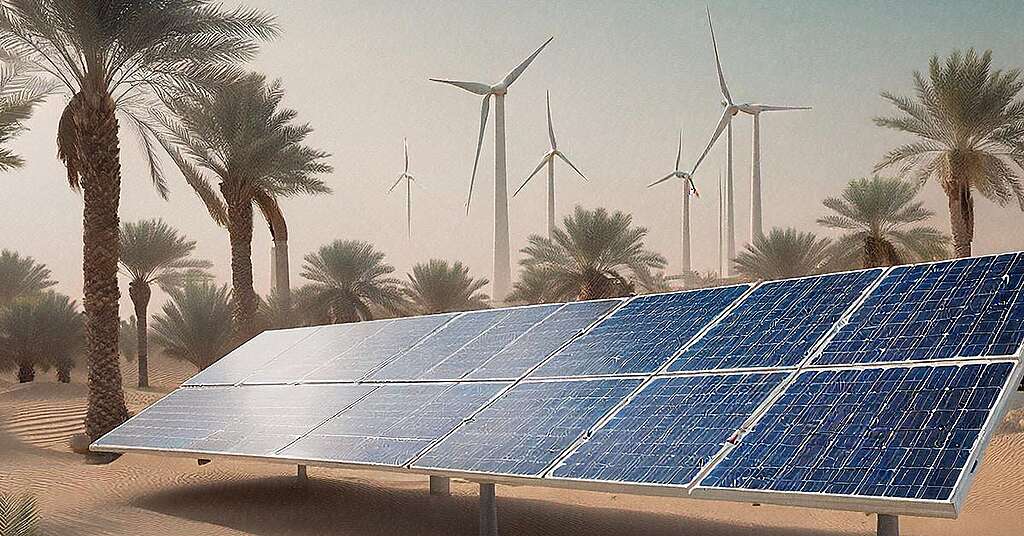
As international leaders, innovators, and policymakers collect in Abu Dhabi from January 13-15 for the World Future Vitality Summit 2026, Greenpeace Center East and North Africa (MENA) will take to the Summit flooring, contributing to discussions shaping the subsequent section of vitality transition within the area and past.
Throughout the Summit program, Greenpeace MENA representatives will present fast-based views on how upstream choices from product design and land use to capital deployment affect emissions, useful resource effectivity, and long-term resilience. The organisation’s engagement will give attention to sensible approaches that cut back waste on the supply, allow agrivoltaics land-use fashions for vitality and meals safety, and mobilise Islamic finance for renewable vitality funding.
Throughout the Summit’s content material agenda, Greenpeace MENA representatives may also contribute to high-level panel discussions bringing evidence-based insights into a number of the most urgent debates. The origination will take part in ‘Designed Out Waste: Breaking the Throw-Away Mindset,’ a session that shifts consideration upstream to the design stage of merchandise and techniques. The panel challenges the idea that waste is an inevitable by-product, highlighting how sturdiness, repairability, and clear end-of-life pathways should be embedded from the outset to allow round, low-carbon economies.
Greenpeace MENA may also host a session exploring the potential of agrivoltaics as a twin resolution for clear vitality technology and meals safety throughout the MENA area. By way of skilled insights and an interactive state of affairs, contributors will study how shared land-use fashions can help rural livelihoods whereas advancing local weather targets, supplied that coverage frameworks prioritise native possession and equitable benefit-sharing.
More Read

On the Summit’s third day, Greenpeace MENA will host the session “The $400 Billion Question: Where Islamic Finance Meets Renewable Energy,” inspecting how Islamic finance may help mobilise local weather capital for renewable vitality throughout the area.
“World Future Energy Summit provides an important platform for bringing diverse perspectives into dialogue,” mentioned Ghiwa Nakat, Greenpeace MENA Govt Director. “As energy systems across the region continue to evolve, it is essential to look beyond capacity and scale, and consider how design choices, land use, and financial frameworks shape long-term outcomes. Our participation at WFES reflects our commitment to engaging constructively in these conversations, by contributing verified findings and practices grounded in real-world experience.”
Along with collaborating in convention periods, Greenpeace MENA will host a devoted Greenpeace MENA Cinema on the exhibition flooring, in collaboration with the World Future Vitality Summit, working throughout all three days of the occasion. The cinema will provide guests a curated, headphone-based movie expertise, creating area to pause and replicate on how sustainability commitments translate into real-world motion. By way of immersive visible storytelling, attendees can interact with the content material at their very own tempo, even amid the vitality of the busy present flooring.
More Read

“At the World Future Energy Summit, we know that awareness doesn’t come from panels alone,” mentioned Sophia Sheikh, Content material and Advertising Director, World Future Vitality Summit. “That’s why we’re creating a number of content material codecs throughout the occasion, from high-level debates to immersive, visible storytelling, together with the Greenpeace Cinema, which affords guests a second to pause, replicate, and interact with sustainability narratives in a extra private and human approach. “
Greenpeace MENA’s presence at WFES 2026 underscores the Summit’s position as a convening area the place governments, trade, finance, and civil society can interact on the sensible dimensions of vitality management, innovation, and future readiness.