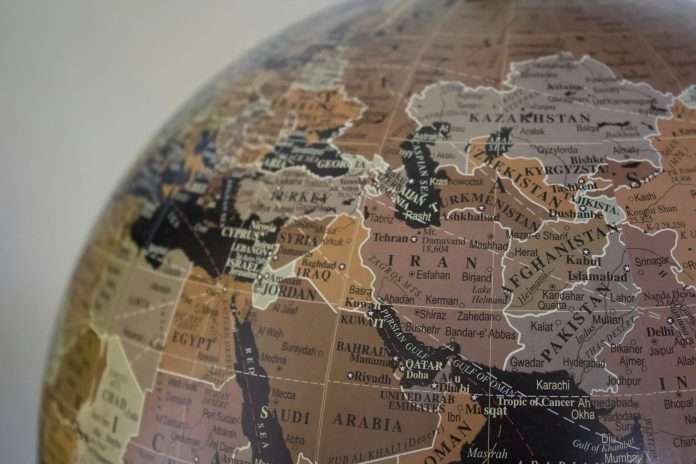


In a quiet however vital shift, the World Financial institution has moved Pakistan out of South Asia and into the Center East and North Africa (MENA) area. At first look, this will seem like a technical adjustment in classification, an administrative realignment to higher set up information, lending portfolios, and regional methods. However such reassignments are not often impartial. They form how international locations are understood, in contrast, and positioned inside international coverage frameworks.
For many years, Pakistan has been grouped inside South Asia, a area outlined not solely by geography but additionally by shared histories, colonial legacies, and intertwined socio-political trajectories. The shift to MENA is just not merely a bureaucratic categorization. It means Pakistan will more and more be considered and assessed alongside Center Jap and North African international locations, somewhat than its conventional South Asian comparator international locations.
The reclassification, launched as a part of the World Financial institution’s up to date operational and analytical framework, displays an inner restructuring of how areas are outlined for the needs of lending, information aggregation, and coverage coordination. Whereas such shifts are usually not unprecedented, they’re seldom highlighted publicly, usually showing as quiet changes inside institutional programs somewhat than headline bulletins.
In sensible phrases, Pakistan’s inclusion within the MENA area locations it alongside a distinct comparability group, starting from North African economies to Gulf states, thereby altering the benchmarks by means of which its improvement trajectory is assessed.
This alteration additionally reorients the institutional lens by means of which Pakistan’s financial and coverage challenges are interpreted, transferring it away from a South Asian body that has traditionally formed a lot of its worldwide engagement.
More Read

Learn Extra: Pakistan’s Reclassification to MENAAP: A Bureaucratic Transfer with Geopolitical Weight
Shifting Coverage and Financial Benchmarks
Past classification, such a shift carries tangible implications for the way Pakistan is located inside international improvement and geopolitical conversations. Regional groupings usually inform funding priorities, analytical frameworks, and programmatic focus areas inside worldwide establishments. As Pakistan turns into a part of the MENA portfolio, it could discover itself aligned with completely different coverage agendas, notably these formed by increased per capita revenue economies within the Gulf, resource-driven progress fashions, distinct labor market buildings, and evolving vitality politics.
More Read

This reorientation additionally resonates with broader geopolitical traits. Pakistan’s financial and strategic engagements with Gulf international locations have deepened over the previous decade, notably in areas akin to labor migration, remittances, and funding partnerships. Being grouped inside MENA might reinforce this westward tilt, each reflecting and subtly legitimizing a shift in how Pakistan is positioned inside international financial networks, particularly in relation to capital flows, diaspora-linked economies, and regional funding corridors.
On the similar time, the transfer recalibrates the comparative frameworks by means of which Pakistan is evaluated. Inside a South Asian context, assessments have historically centered on shared developmental challenges akin to poverty discount, service supply, and demographic pressures. In distinction, a MENA framing introduces a distinct set of reference factors: increased revenue benchmarks in elements of the Gulf, state-led improvement fashions, resource-dependent economies, and different governance buildings. Whereas Pakistan is just not straight corresponding to many of those economies, the shift nonetheless alters the analytical lens by means of which its efficiency is interpreted.
These altering benchmarks might not translate into direct financial competitors, however they do reshape expectations. Coverage prescriptions, funding logics, and improvement narratives are sometimes knowledgeable by regional averages and peer comparisons. As these friends change, so can also the requirements in opposition to which progress is measured, subtly influencing how Pakistan’s financial trajectory is known and evaluated.
Areas as Narrative Frameworks
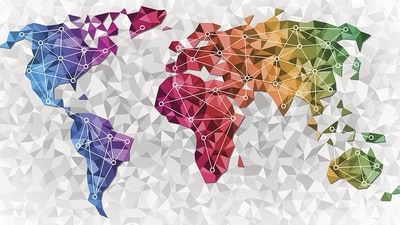
To interpret this shift purely by means of the lens of coverage or geopolitics is to miss a deeper course of at work. Regional classifications don’t merely set up the world; additionally they take part in developing it.
On this sense, areas are much less geographic details and extra narrative frameworks. They’re produced, stabilized, and circulated by means of institutional practices, studies, funding classes, information programs, and coverage language. Over time, these repeated classifications start to accumulate the standing of widespread sense, showing pure and self-evident.
More Read

That is the place the concept of political folklore may be understood extra concretely, not as an summary idea, however as a lived course of. Very similar to folklore, which positive factors authority by means of repetition and shared acceptance, regional classes derive their energy from steady institutional reinforcement. They inform a narrative about proximity, belonging, and similarity, even when these boundaries stay fluid and contested.
The reclassification of Pakistan illustrates this dynamic. By transferring Pakistan from South Asia to MENA, the World Financial institution is just not merely reorganizing its inner programs; it’s re-scripting the narrative by means of which Pakistan is situated within the international creativeness. This new framing shall be reproduced throughout datasets, coverage paperwork, funding streams, and comparative analyses. With every repetition, the classification positive factors legitimacy, till it begins to really feel much less like a choice and extra like a truth.
Learn Extra: Struggle in Iran Threatens South Asian Economies’ Gulf Remittances
What makes this course of vital is just not its immediacy, however its subtlety. There isn’t a single second at which identification shifts. As an alternative, which means accumulates regularly, as institutional narratives sediment into on a regular basis understanding. On this approach, regional reclassification operates as a type of political folklore, quietly shaping how international locations are perceived, grouped, and understood over time.
There’s, nonetheless, a faint historic echo embedded in such acts of classification. The drawing and redrawing of boundaries, whether or not territorial or conceptual, has lengthy been tied to buildings of energy. Colonial regimes as soon as mapped the world in ways in which served administrative comfort and strategic management, usually disregarding the lived realities and identities of the individuals inside these boundaries.
Up to date institutional classifications are neither equal nor as overtly coercive. But they function inside the same logic of ordering the world from a place of authority. The ability to outline areas, to group international locations, and to assign them analytical identities stays concentrated inside international establishments. On this sense, the act of reclassification carries a refined reminder: that the authority to call and set up the world is itself a type of energy, one which echoes, in quieter methods, earlier practices of ordering and deciphering the world.
Refined Cultural Results
On the degree of on a regular basis life, such a shift is unlikely to provide rapid or seen cultural change. Individuals don’t all of the sudden reimagine themselves due to a reclassification in a world database. Pakistan’s linguistic range, historic continuities, and cultural practices stay deeply rooted in their very own trajectories.
Nonetheless, the longer-term symbolic results are extra advanced. Regional labels regularly form the frameworks by means of which international locations are studied, represented, and mentioned. They affect tutorial discourse, media narratives, and coverage conversations, all of which contribute, slowly however persistently, to how identities are framed.
Over time, being positioned inside MENA somewhat than South Asia might alter the reference factors by means of which Pakistan is known internationally. It might affect which comparisons are drawn, which tales are amplified, and which connections are foregrounded. These shifts don’t overwrite current identities, however they will layer new meanings onto them, subtly reshaping the broader narrative panorama.
The reclassification of Pakistan from South Asia to MENA is, on the floor, an administrative choice. But beneath its technical framing lies a extra advanced interaction of coverage, notion, and energy.
The place a rustic is positioned on the worldwide map, analytically as a lot as geographically, issues. It shapes how it’s in contrast, how it’s funded, and the way it’s imagined. Extra importantly, it raises a deeper query: is belonging decided by geography alone, or by the narratives that establishments assemble and maintain?
In the long run, regional classifications are usually not merely reflections of the world as it’s. They’re additionally devices by means of which the world is interpreted, and, in refined methods, redefined.
*The views offered on this article are the authors’ personal and don’t essentially replicate the views of The Diplomatic Perception.