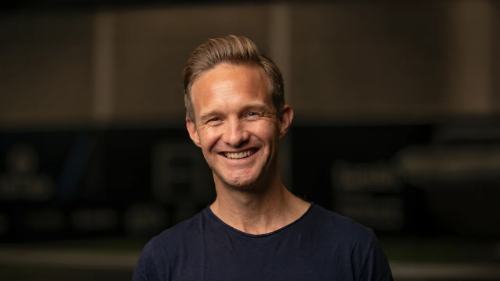


Dana Al Fardan is troublesome to catch for the easy motive that she is busy. A Qatari composer and songwriter, she is a mom with a schedule that shifts continuously. After we lastly communicate, she has simply landed again in Doha from a flight. She sounds centered and simple, as if she’s already trimmed away something that doesn’t should be mentioned.
The dialog begins with “Pulse”, the title of her new trilogy of concert events. It’s a phrase with apparent associations, however Al Fardan’s curiosity is sensible. “‘Pulse’ brings a sense of urgency,” she says. For her, it’s additionally “the core and the origin,” she continues to share. “The whole point of ‘Pulse’ is we’re going to the origin. It’s the origin story of all my music.”
By “origin,” she doesn’t imply a neat record of influences or a profession timeline however somewhat, the primary second a chunk arrives, significantly, the purpose the place an concept turns into a sound. It’s that spark earlier than construction, even earlier than you title it, rating it or resolve what it’s actually about. Writing begins on the piano, with improvisation for Al Fardan. “The first thing I do is sit on the piano and begin to play the first theme that appears in my head and then variations on the theme. It’s always improvisation,” she says.
{Photograph} by Dimitri Valdir
From there, her inventive course of could be break up into two completely different routes: instrumental writing and the writing that features lyrics. With instrumental work, she hears story first — an inside narrative the place the music begins to attain virtually instantly. “If it’s instrumental, then it scores a storyline that I am creating in my mind,” she says. That storyline typically follows Joseph Campbell’s “Hero’s Journey,” and ultimately, an alternate world is unfolding in her head.
More Read

With lyrics, the tactic stays constant and the melody stays in management. “If I’m writing music and lyrics, then the words take the shape of the melody and the meaning is generated by the flow of the music and its rhythm,” she says. It’s virtually as if she’s saying language is responsive somewhat than directive, and if that course of may drift into lushness, Al Fardan doesn’t appear significantly fearful. Her reasoning is easy: the emotional reality is established initially, within the melodic line. “The melody is always sincere. Music is an honest channel of everything inside of me. There’s no cover-up,” she says, separating the melody from what comes after it. “The arrangement is a part of the world. The melody is the idea. The arrangement and orchestration generate the world that that idea exists in,” the artist continues.
That phrase, “world,” retains returning in her solutions. She makes use of it to clarify why orchestration issues, as if it’s not ornament however setting: the situations by which the melody can reside. As soon as she begins speaking about setting, she strikes naturally towards how she thinks about sound itself.
“Sound for me is living, it’s vibration,” Al Fardan factors out. She talks about it as one thing bodily and one thing that may shift consciousness as a result of its have an effect on on the physique. Her sense of sound as bodily additionally reveals up in the place music involves her. Melodies, she tells me, typically arrive whereas she’s coaching. “A lot of the times, a melody will appear when I am working out,” she says, as a result of train is among the few methods she will be able to reliably disconnect.
More Read

“I train to quiet the noise in my head,” she provides. The artist doesn’t current that as a unusual behavior a lot as a needed situation. “Creative energy comes from being; from living and experiencing. Everything is a thoughts and my feelings,” Al Fardan says. Writing, in her framing, depends upon quiet. “Music for me comes from being embodied and it requires time, space and a quiet mind,” she says.
 {Photograph} by Dimitri Valdir
When the dialog turns to her albums, she speaks about them virtually like a sequence of locations. The undertaking she’s at present engaged on, “Eclipse,” is the clearest shift in her personal description. She describes it as a “celestial album and a reflection of our relationship with the cosmos.” She locations it consistent with her earlier work. “We had “Sandstorm,” that was our relationship with the land; “Tempest” [with] water; “Indigo” for inward wanting and introspection,” she explains. She pauses mid-thought, correcting for simplicity.
“They’re all introspective. Everything reflects on the inside. But “Eclipse” is our celestial origins,” she provides. That insistence that all the pieces begins inside can be how she explains what stays constant throughout her physique of labor.
Throughout Al Fardan’s catalogue of music, she hears recurring DNA: “Some are Eastern European sounding, some southeast Asian, some Arabesque, some Celtic,” she says. She hyperlinks that to a form she returns to repeatedly: the lullaby, the fairy story construction. And equally, she’s extraordinarily clear about who she’s writing for. “I never picture listeners. My work is honest because I write for me,” she says. The purpose is to maintain the work undistorted in the meanwhile it’s made and to guard no matter arrived first. That inside normal can be how she decides when one thing is absolutely completed and able to go. “I know when a piece is finished when I’m satisfied and the journey in the music is complete when there is a clear beginning, and a substantial journey to the end,” she says.
The very last thing Al Fardan insists on is motion and explains how all the pieces is in a relentless evolution. “Nothing is fixed; creativity is contingent upon movement and flexibility,” she says. “It’s about opening the sphere of exploration and being open to the results.” “Pulse”, in that context, turns into a clear approach of describing what Al Fardan is doing now. She’s making a return to the start, naming the supply and constructing ahead from it.