

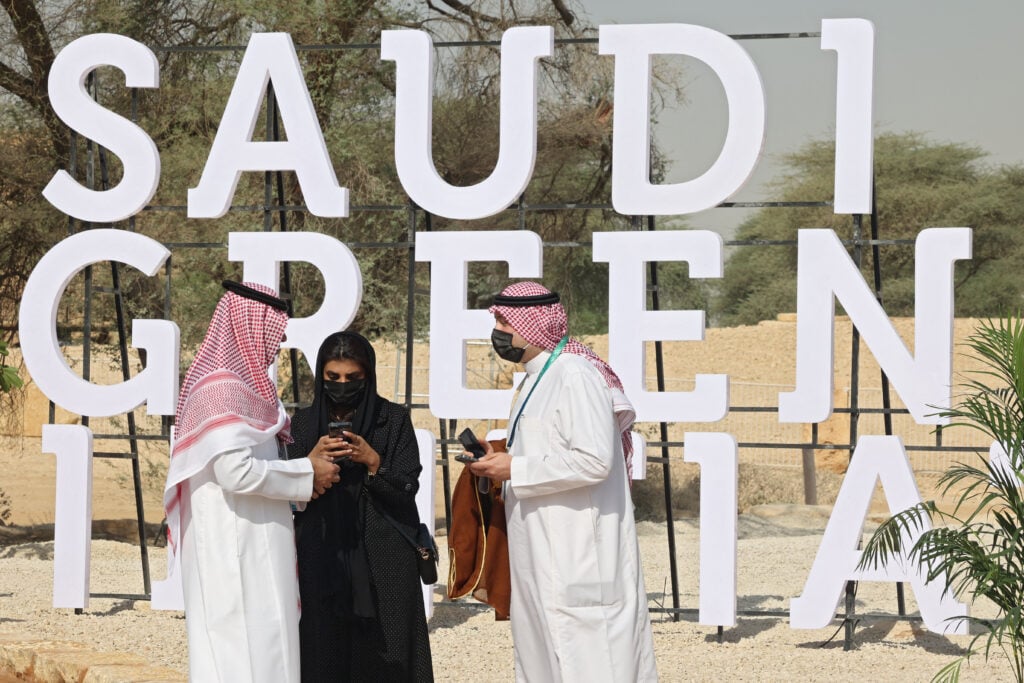
Picture 4: Attendees are pictured in the course of the opening ceremony of the Saudi Inexperienced Initiative discussion board on October 23, 2021, within the Saudi capital Riyadh. Supply: Fayez Nureldine / AFP
Creator: Fanack Water Editorial Staff
Water shortage is intensifying throughout the Center East and North Africa (MENA), threatening financial stability, public well being, and regional safety. To deal with this mounting disaster, governments and buyers should shut an unlimited water infrastructure funding hole with revolutionary options. This text evaluates the funding hole in MENA’s water sector and explores how inexperienced bonds, public-private partnerships (PPPs), and sovereign wealth funds (SWFs) can collectively unlock over $500 billion for a sustainable water future.
The Water Infrastructure Funding Hole in MENA
If pressing investments should not made, water shortage may shrink the area’s GDP by as much as 14% by 2050, underscoring the financial crucial for advancing water infrastructure (Coverage Heart for the New South).
More Read

Revolutionary Financing: The Pathway Ahead
1. Inexperienced BondsGreen bonds are revolutionizing venture finance by earmarking capital for environmental infrastructure, together with water tasks. Globally, the inexperienced bond market surpassed $1.6 trillion in 2021, with a number of MENA international locations tapping into this highly effective funding supply (World Financial institution).
Egypt’s Instance: In 2020, Egypt issued its first inexperienced bond, elevating $750 million to fund sustainable water and power tasks—a pioneering transfer within the Arab world (Coverage Heart for the New South).
Investor Attraction: Inexperienced bonds appeal to a broad vary of buyers targeted on local weather and sustainability, improve transparency, and sometimes provide decrease borrowing prices. The funds can be utilized for conventional “grey” infrastructure or for nature-based options reminiscent of wetland restoration, delivering a number of co-benefits (World Assets Institute).
More Read

2. Public-Personal Partnerships (PPPs)PPPs are reworking water improvement throughout MENA, bringing non-public sector capital, experience, and improvements.
Saudi Arabia’s Pipeline: Saudi Arabia has developed over 40 water PPP tasks, together with new desalination and sewage remedy amenities. Joint ventures like Madinah-3, Buraydah-2, and Tabuk-2, valued at over $700 million mixed, had been accomplished even in the course of the pandemic, proving the mannequin’s resilience (Aninver).
PPP Advantages: PPPs assist scale back monetary threat for governments, enhance venture supply effectivity, and introduce superior know-how and operational requirements. With design-build-operate-transfer preparations, non-public consortia fund, assemble, and run key infrastructure earlier than transferring it to public authorities.
3. Sovereign Wealth Funds (SWFs)SWFs within the Gulf have emerged as crucial financiers and catalysts within the water transition.
Strategic Investments: Funds just like the Saudi Public Funding Fund are investing closely in renewable-powered desalination and water networks, leveraging their long-term capital to finance advanced infrastructure (Coverage Heart for the New South, Duke Legislation).
Cross-Border Potential: SWFs are additionally uniquely positioned to facilitate regional water tasks, reminiscent of shared desalination and transboundary useful resource administration, serving to overcome political and funding limitations (International Options Initiative).
4. Blended Finance and “Green Sukuk”Blended finance, which mixes public, non-public, and philanthropic capital, is accelerating water funding. Current innovation additionally contains “green sukuk” (Islamic bonds), integrating rules of Sharia-compliant finance with environmental influence. As an example, Dubai Electrical energy and Water Authority issued a $1 billion inexperienced sukuk to fund renewable power and water tasks.
Coverage Suggestions and Regional Initiatives
More Read

Coverage Reforms: Governments have to de-risk investments by means of strong authorized frameworks, clear coverage alerts, and incentives for personal funding.
Capability Constructing: Regional collaboration—such because the Arab Initiative for Mobilizing Local weather Finance for Water—can assist construct finance and venture readiness throughout borders (UNESCWA).
Built-in Water-Power Planning: Embedding renewables in water manufacturing (e.g., photo voltaic desalination) reduces prices and carbon footprints concurrently.
Conclusion
Bridging the water infrastructure funding hole in MENA is crucial for sustainable progress, social stability, and local weather resilience. By mobilizing greater than $500 billion by means of inexperienced bonds, PPPs, SWFs, and revolutionary finance instruments, the area can flip challenges into alternatives—offering water safety for generations to return.