

James Schofield
The Center East and North Africa (Mena) is rising as one of many world’s most necessary progress areas for clear {industry} financing, with 84 introduced initiatives representing $642 billion in potential funding throughout clear fuels, fertilisers, metal, and aluminium.
The expansion comes as clear {industry} crops globally are securing finance on the quickest tempo on document, with 19 initiatives price $43 billion reaching last funding determination prior to now six months alone, double the tempo of a yr earlier.
The size of Mena’s alternative is highlighted in a brand new report, ‘Clean Industry Rising: the foundation of resilient value chains’, from Mission Attainable Partnership, supported by the Industrial Transition Accelerator (ITA) and printed alongside the newest World Venture Tracker.
In an unique interview with OGN vitality journal, James Schofield, Deputy Director, ITA, says: “Mena countries have the advantage of being able to draw on proven policy and regulatory instruments already tested in other markets to activate domestic demand in turn providing a level of revenue certainty.”
More Read

Regardless of an enormous $642 billion pipeline, solely a minimal fraction has reached a last funding determination (FID). What boundaries are stopping regional builders from changing this pipeline into capital-backed, operational realities?
From a structural perspective, one of many key priorities is guaranteeing the fast scaling up of inexpensive, dependable, and accessible renewable electrical energy for industrial customers.
Whereas important progress has been made throughout regional electrical energy markets, additional motion is required to develop renewable vitality deployment, strengthen grid entry, and set up long-term mechanisms that present the value certainty required to underpin funding selections in low carbon industrial manufacturing.
More Read

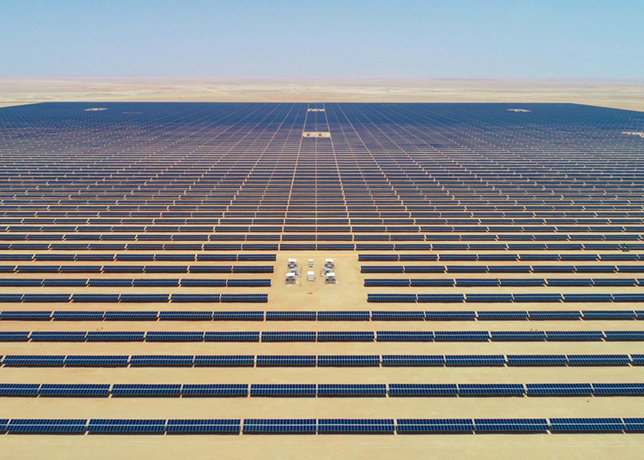
The Amin photo voltaic park in Oman … 1,500 sq km of land has been earmarked for inexperienced hydrogen
That is notably necessary as exporters search to adjust to evolving worldwide regulatory frameworks, together with entry necessities for European markets.
Measures, reminiscent of carbon pricing, inexperienced public procurement, low carbon product requirements, constructing laws, and insurance policies supporting the provision and uptake of sustainable feedstocks may help create the enabling circumstances wanted to unlock funding and speed up market improvement.
The EU ReFuelEU Aviation mandate launched in 2023 has already resulted in a pointy enhance in sustainable aviation gasoline initiatives reaching last funding selections, with world capability greater than doubling within the final two years, demonstrating a transparent provider framework.
On the macroeconomic aspect, excessive sovereign and nation threat rankings make exterior debt financing costly, as worldwide lenders value in a threat premium.
More Read

Entry to personal capital stays restricted throughout a lot of the area exterior the GCC.
Geopolitical and safety circumstances in particular corridors, reminiscent of North Sinai, have additionally immediately stalled mission improvement in in any other case useful resource wealthy areas.
The important thing reality stays that the area does maintain an unlimited pipeline of initiatives, together with many sustainable aviation gasoline and chemical substances initiatives, with the potential to create new clear industrial crops that may serve home and worldwide markets.
How can Mena nations successfully compete for worldwide non-public fairness when world mission tracker information confirms that China absorbed over 60 per cent of all clear {industry} FIDs within the final six months?
Whereas GCC markets appeal to worldwide non-public fairness on account of excessive sovereign credit score rankings that cut back perceived threat premiums, the broader area faces challenges the place weaker rankings make the enterprise case tougher.
For non-GCC markets, the crucial lever is the blended finance structure, utilising programmes just like the Local weather Funding Funds, multilateral improvement financial institution amenities, and platforms like TIDIP to supply first loss ensures, concessional tranches, and credit score enhancements.
This structure improves the chance return profile sufficiently to draw non-public capital that may not in any other case deploy in these markets, as demonstrated by the Altera fund, which leverages concessional capital from the UAE to draw main institutional buyers, reminiscent of Brookfield and BlackRock, as a result of the blended construction makes the economics viable.
In parallel, sturdy coverage alerts construct confidence and open alternatives for contracting offtake to unlock funding.
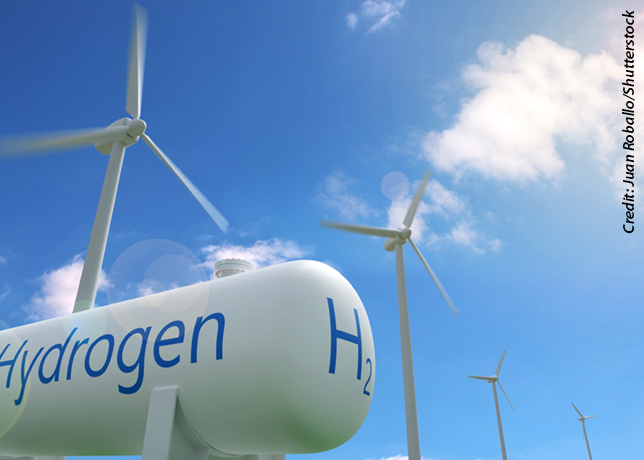
The worldwide clear vitality {industry} is securing finance on the quickest tempo on document
Given the capital-intensive nature of flagship regional developments, what particular risk-mitigation frameworks should Center Japanese sovereign wealth funds introduce to fulfill worldwide lenders?
A variety of bundled de-risking instruments can present catalytic options.
Marsh, by way of ICIEC reinsurance, has already structured tailor-made political threat insurance coverage (PRI) insurance policies for photo voltaic initiatives in Egypt that catalysed important fairness injection, this mannequin is replicable
Moreover, blended finance buildings, reminiscent of first or second loss amenities and concessional loans, immediately enhance threat return profiles for industrial lenders.
Lastly, export credit score businesses, reminiscent of Germany’s Euler Hermes, present very important credit score ensures on senior debt tranches into increased threat jurisdictions, as demonstrated within the Neom Inexperienced Hydrogen Venture, complemented by structural market incentives, carbon credit, and direct grants.
Since home markets lack localised carbon pricing mechanisms to mandate adoption, how can regional producers assure long-term off-takers for high-premium merchandise like inexperienced metal or clear fertilisers?
Producers should capitalise on mature export markets just like the EU, the place the Carbon Border Adjustment Mechanism (CABM) creates structural pricing benefits for zero legal responsibility regional commodities over gray opponents.
This regulatory atmosphere, mixed with exceptionally low levelised renewable vitality prices from plentiful photo voltaic sources, renders long run export agreements commercially credible, giving regional producers a real aggressive benefit to seize important market share.
Provided that the worldwide surge in SAF investments is closely reliant on binding Western laws, are regional initiatives strictly depending on overseas regulatory compliance to stay bankable?
Bankability represents strategic positioning fairly than dependency, as geographical benefits and big home transit hubs in Dubai and Abu Dhabi create a sturdy industrial basis.
Rising company strain relating to emissions ensures that close to time period regional demand stays an absolute excessive likelihood.
Does heavy reliance on overseas know-how agreements and worldwide off-takers depart Mena’s export hubs commercially uncovered if Western commerce priorities or subsidy frameworks shift?
The worldwide industrial transformation fosters deep industrial interdependencies fairly than remoted publicity.
As a result of worldwide know-how deployment and inexperienced sourcing require mutual collaboration throughout geographies, diversifying the associate base throughout European, Asian, and Gulf off-takers successfully mitigates coverage dangers.
How can geographically adjoining Mena nations forestall a value-destructive regional subsidy warfare as they concurrently goal the very same import markets in Europe and Asia?
Nations should strengthen regional industrial cooperation frameworks to maximise comparative benefits and stop duplication.
Integrating cross border provide chains permits international locations to capitalise on localised feedstocks, reminiscent of utilising regional cooking oil to help processing capacities in adjoining nations.
One such platform is the Built-in Industrial Partnership for Sustainable Financial Improvement (IIPSED), which brings collectively the UAE, Qatar, Egypt, Oman, Bahrain, and Turkiye.
How susceptible are the area’s high-capital belongings to the extraordinary localised geopolitical shocks and maritime disruptions detailed within the report?
Geopolitical threat can’t be fully eradicated, however utilising complete insurance coverage buildings and strong contractual frameworks permits energetic worldwide buyers and lenders to handle and value these profiles successfully.
To what extent will the execution of Mena’s mission pipeline stay reliant on Chinese language provide chains, and does this compromise the “supply chain resilience” that the report champions?
MENA’s clean-industry pipeline is China-enabled, however there isn’t a purpose for it to change into China-dependent by design.
The resilience take a look at just isn’t whether or not Mena can keep away from China altogether; it’s whether or not MENA can use Chinese language participation to construct optionality: Native meeting, regional manufacturing niches, workforce functionality, critical-mineral processing, diversified suppliers, non-Chinese language know-how companions, strong MRV methods, and bankable long-term offtake buildings.
KAPSARC’s work on GCC-China critical-minerals collaboration factors on this identical course.
The Carboun institute critical-minerals temporary is much more express: MENA is unlikely to copy China’s full-spectrum dominance, however it might probably goal aggressive niches, reminiscent of low-emissions mining, selective refining, and integration with regional renewable manufacturing.
Mena can construct resilience by way of diversification and localisation on the margins that matter most, together with crucial spares, grid gear, battery packs, chosen electrolyser elements, mineral processing, certification, O&M functionality, and different provider relationships.
Given Mena’s strategic place alongside world maritime commerce routes, what speedy infrastructure mandates should regional governments enact to make sure their ports don’t fall behind the worldwide clear gasoline transition?
Governments should align quickly with worldwide emission discount methods while sustaining collaborative, open insurance policies with main maritime operators.
Offering structured incentives for bunkering infrastructure, retrofitting, and gasoline storage attracts very important non-public capital, guaranteeing substantial long run income returns to the area. -OGN